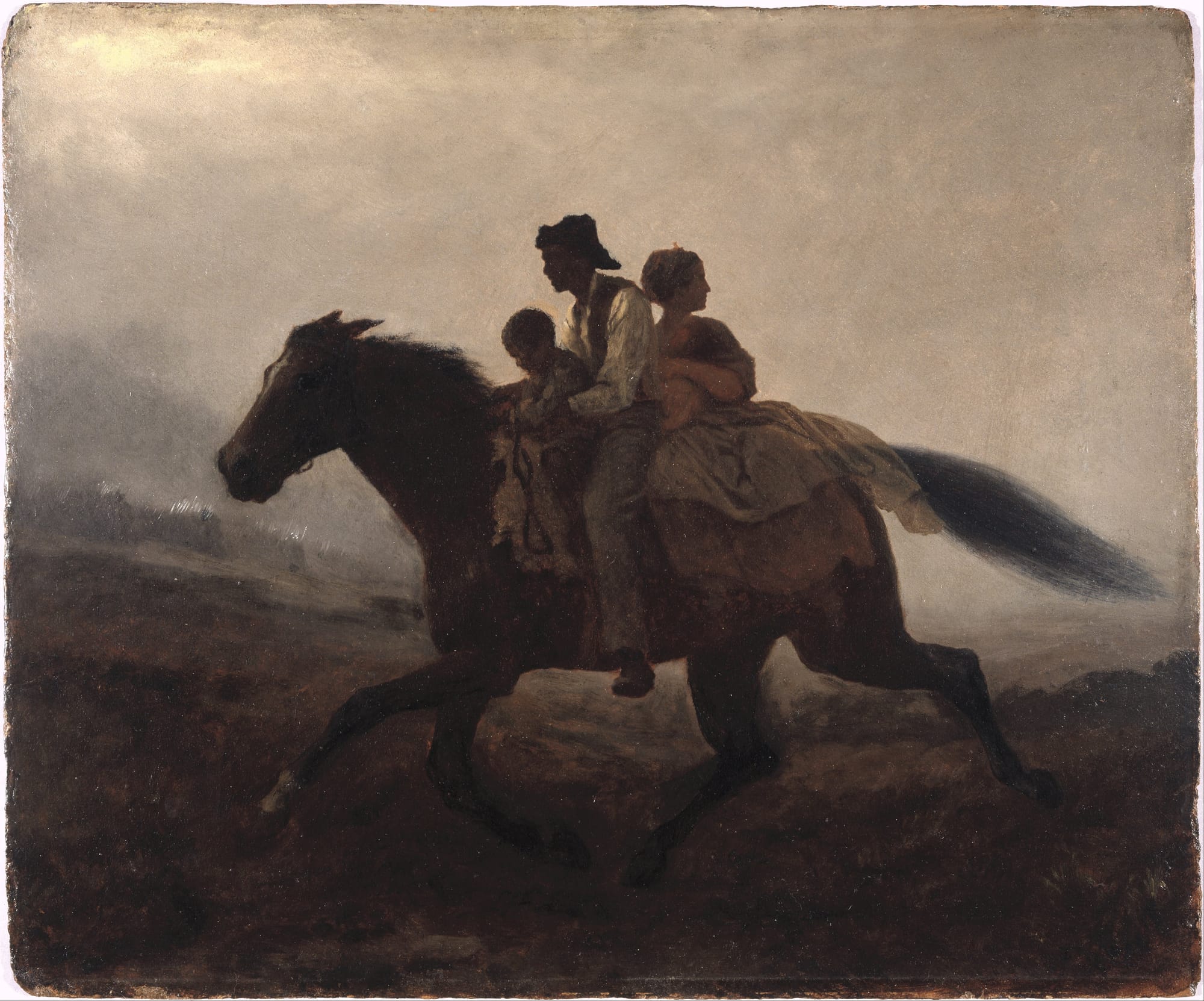
Yesterday, I interpreted the white American Robert Frost's poem "The Road Not Taken" (1915) as a poem about a fugitive from enslavement by the African-American Paul Laurence Dunbar (1872-1906). In a sense, when I read the poem that way, I find it even richer than it is when read as a poem by a free white man: Suddenly, Frost's rather generic poem palesbeside Dunbar's much darker and more urgent poem. Today, I thought I'd try to do the same with Frost's "Stopping by Woods on a Snowy Evening" (1923). However, although enslaved people did escape on horseback, the poem contains hardly any details that lend themselves to such an interpretation. (Andrew Shields, #111Words, 2 April 2026)